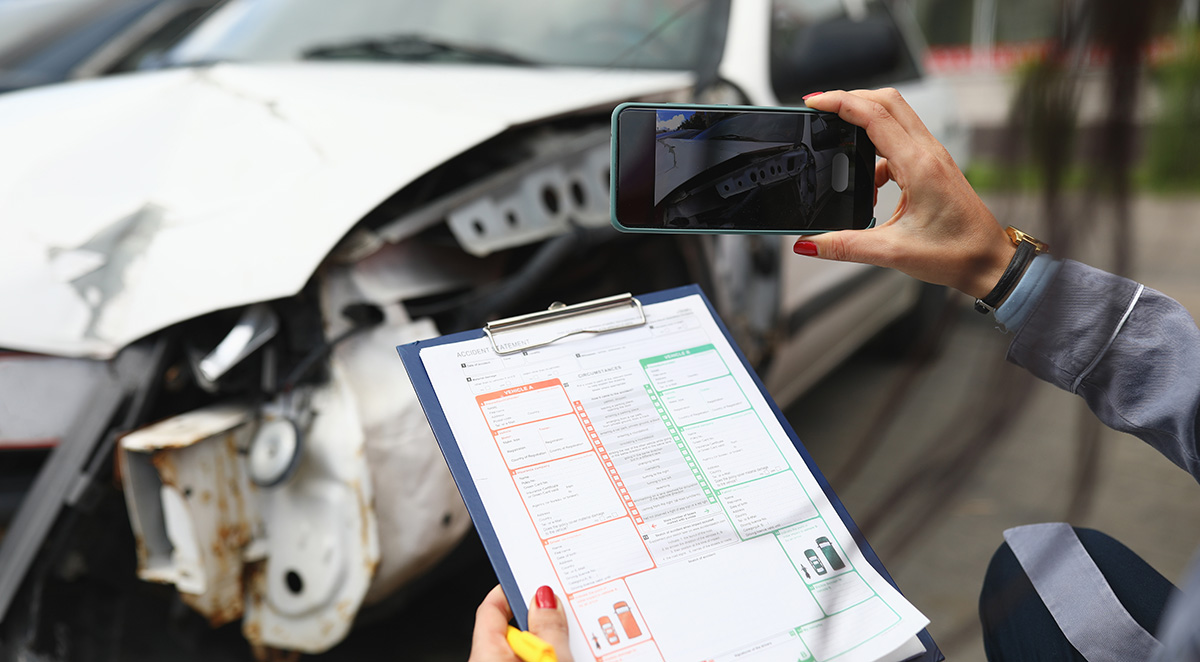
After a car accident in North Carolina, the paperwork can feel overwhelming at exactly the moment you have the least energy for it. Yet one document matters more than almost any other for both your recovery and your claim: the official crash report. Knowing how to find it, request it, and read it puts you in a far stronger position with insurance companies and, if it becomes necessary, in court.
This guide walks you through what the North Carolina crash report is, when it becomes available, and the three ways you can get a copy. We will also cover what to do if you notice an error and how the report supports a personal injury claim.
Quick Summary
- North Carolina's official crash report is called the DMV-349, and the investigating officer completes it at the scene.
- The report is forwarded to the NC Division of Motor Vehicles, and a certified copy is available to the public for a small fee (N.C. Gen. Stat. § 20-166.1).
- Most reports are ready to request within 3 to 5 business days of the crash.
- You can request your report three ways: online through the NCDOT portal, by mail using Form TR-67A, or in person.
- Review your report carefully for mistakes, because insurers rely heavily on it to assign fault.
What Is a North Carolina Crash Report (DMV-349)?
The DMV-349 is the standard form a law enforcement officer uses to document a motor vehicle accident in North Carolina. People often call it the crash report, the accident report, or simply the police report. It captures the essential facts of the collision while the details are still fresh.
A typical DMV-349 records the drivers, passengers, and any pedestrians or cyclists involved, along with the vehicles, insurance information, road and weather conditions, and a diagram of how the crash happened. It also includes the officer's narrative and opinion about what caused the accident. These details often shape how an insurance adjuster views liability.
The report is not optional busywork. North Carolina law requires the investigating officer to document reportable accidents and forward the report to the NC Division of Motor Vehicles (N.C. Gen. Stat. § 20-166.1). Reports prepared by a law enforcement officer are public records, which is why you are entitled to obtain a copy.
When Will Your Crash Report Be Available?
Patience helps here, but not too much of it. A local law enforcement agency that receives an accident report must forward it to the Division within 10 days (N.C. Gen. Stat. § 20-166.1). In practice, most reports are entered into the state system and ready to request within 3 to 5 business days of the crash.
The exact timing depends on the complexity of the accident, the number of vehicles involved, and the workload of the responding agency. A straightforward two-car collision tends to post quickly, while a serious multi-vehicle crash may take longer to finalize. If your report is not available right away, wait a few days and check again rather than assuming something went wrong.
Three Ways to Request Your Crash Report
North Carolina gives you several options for getting a copy. Each one requires a small fee and a few basic details about the accident.
Online Through the NCDOT Portal
The fastest route is the official NC Division of Motor Vehicles crash report system. You can search by driver name, date, and county, pay a small fee by credit card, and download the report as a PDF (NC Division of Motor Vehicles). This is usually the most convenient choice for individuals who simply need their own copy.
By Mail Using Form TR-67A
If you prefer to request by mail, you will complete the Crash Report Request form, known as the TR-67A, and send it with the required payment to the address listed on the form (NC Division of Motor Vehicles). Keep in mind that the form is not fillable on screen, so you will need to print it and complete it by hand. Allow extra time for mail delivery and processing.
In Person or Through Local Law Enforcement
You can also request your report in person at the DMV in Raleigh, or you may contact the law enforcement agency that responded to your accident. Many local police departments, including those in larger cities, maintain their own portals or simply direct you back to the state system. If a city police department handled your crash, checking with that agency first can sometimes save a step.
What Information You’ll Need
Before you make a request, gather a few key details so the search goes smoothly. Having these on hand prevents delays and helps you locate the correct report quickly.
- The date and location of the accident
- The names of the drivers involved
- A driver's license number, if available
- The report or case number, if the officer provided one at the scene
The officer should hand you an information exchange sheet at the scene that lists the agency name and a report number. Hold onto that document, because it makes finding your report far easier later.
What to Do If There Is an Error on Your Report
Crash reports are filled out quickly under stressful conditions, so mistakes happen. An incorrect detail about the direction of travel, the point of impact, or which driver had the right of way can directly affect how an insurer assigns fault. Reviewing your report line by line is one of the most important steps you can take.
If you spot a factual error, such as a misspelled name or an incorrect insurance policy number, you can usually ask the investigating officer or agency to correct it. Disagreements about the officer's opinion on fault are harder to change and often require additional evidence, such as photos, witness statements, or an expert review. An experienced attorney who handles personal injury and wrongful death cases can help you gather that supporting evidence and push back when a report does not tell the full story.
How Your Crash Report Strengthens an Injury Claim
The crash report is often the single most influential document in the early stages of a claim. Adjusters use it to evaluate liability, and a clear report that supports your version of events can make settlement negotiations far smoother. A report that contains gaps or errors, on the other hand, can become an obstacle that costs you compensation.
This is why getting your report early and reviewing it closely matters so much. The sooner you understand what the report says, the sooner you can address any problems and build a stronger case. If the report raises concerns or your injuries are significant, it is worth speaking with a lawyer before you accept any offer. Our guide on how to choose a personal injury attorney can help you find the right advocate for your situation.
Frequently Asked Questions
How much does a NC crash report cost?
The NC Division of Motor Vehicles charges a small fee for a copy of your crash report, payable when you request it online, by mail, or in person (NC Division of Motor Vehicles). Some local law enforcement agencies may provide a copy at a lower cost or for free, so it can be worth checking with the responding department.
Can I get a crash report if I was not the driver?
Yes. Reports prepared by a law enforcement officer are public records in North Carolina, so injured passengers, vehicle owners, and others involved can request a copy (N.C. Gen. Stat. § 20-166.1). You will still need the basic accident details to locate the correct report.
What if no police report was filed for my accident?
Not every minor accident results in a formal report. If officers did not respond or no DMV-349 was filed, you can still document the crash yourself by collecting photos, witness contact information, medical records, and a written account of what happened. This documentation becomes especially important when no official report exists to support your claim.
How long do I have to file an injury claim in NC?
North Carolina generally allows three years to file a personal injury lawsuit, though the deadline can differ depending on the circumstances of your case. Because missing this window can permanently bar your claim, it is wise to speak with an attorney well before the deadline approaches.
Conclusion
Getting your North Carolina crash report does not have to add stress to an already difficult time. Once you know it is called the DMV-349, when it becomes available, and how to request it through the NCDOT portal, by mail, or in person, the process is straightforward. The real value comes from reviewing the report carefully and acting on what it says.
If your accident caused injuries and you are unsure how the report affects your rights, you do not have to sort it out alone. The team at the Law Offices of Timothy D. Welborn is here to help you understand your options and protect your claim. Contact us today to schedule a consultation.
