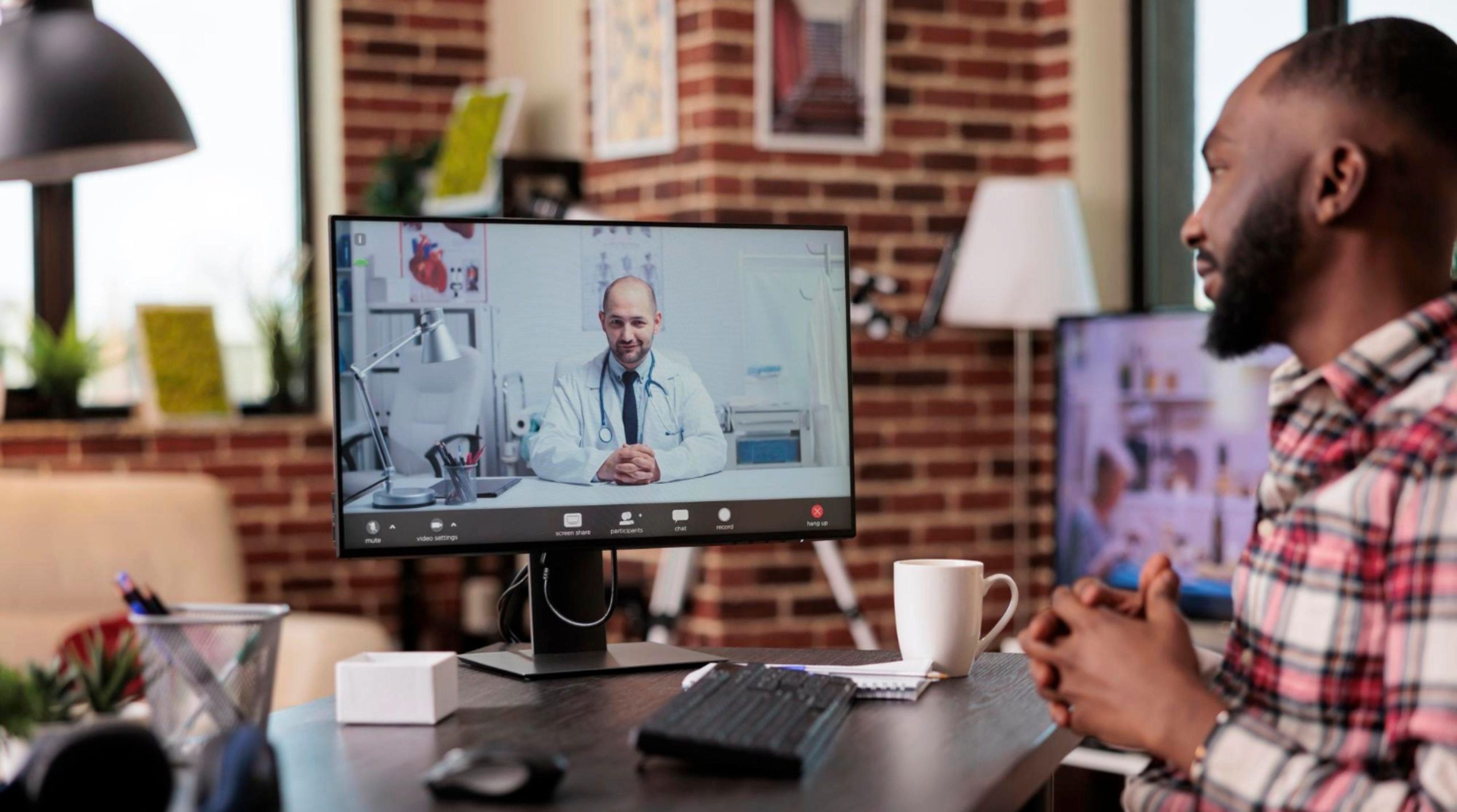
Telehealth has transformed the way Americans access medical care. What began as an emergency measure during the COVID-19 pandemic has become a permanent fixture of the healthcare landscape, with 71.4% of physicians now reporting weekly telehealth use in their practices — nearly triple the 25.1% who used it before the pandemic (American Medical Association). As of 2024, more than half of all Americans have participated in at least one telehealth visit, and the trend shows no signs of slowing down.
For people living with disabilities that make it difficult to leave their homes, travel to appointments, or access specialists in their area, telehealth has been nothing short of a lifeline. But if you're applying for Social Security Disability Insurance (SSDI), the shift toward virtual care raises an important question: will the Social Security Administration accept my telehealth records as evidence for my disability claim?
The answer is more nuanced than a simple yes or no. While the SSA does accept telehealth records as valid medical evidence, the strength of that evidence depends on what your provider documents, how thoroughly they capture your functional limitations, and whether your overall medical record tells a complete story. This article explains exactly how telehealth fits into the SSDI process, where virtual care can strengthen your claim, where it may fall short, and what practical steps you can take to ensure your telehealth records support the strongest possible application.
Key Takeaways
- The SSA does accept telehealth records as valid medical evidence for disability claims, as long as they come from an "acceptable medical source" and contain sufficient detail about your condition and its functional limitations
- Telehealth is particularly strong for documenting mental health conditions, chronic disease management, medication management, and establishing consistent treatment history
- The SSA now offers telehealth consultative examinations for mental health and speech/language evaluations — you can always decline and request an in-person exam instead
- Detailed documentation matters more than visit format — a thorough telehealth note is more valuable than a brief in-person note that lacks specifics about your limitations
- A hybrid approach works best for physical conditions — combining regular telehealth visits with periodic in-person examinations and diagnostic testing creates the most complete evidence package
The Rise of Telehealth and What It Means for Disability Applicants
The explosion of telehealth has been one of the most significant shifts in American healthcare in decades. Medicare telehealth visits surged from approximately 5 million pre-pandemic to over 53 million during the height of COVID-19, and while usage has stabilized somewhat since then, it remains far above pre-pandemic levels (National Center for Health Statistics). More than 80% of patients who have used telehealth report being willing to use it again, and physicians across most specialties have integrated it into their routine practice.
For people applying for SSDI, telehealth offers several distinct advantages. Many disability applicants have conditions that make traveling to appointments difficult or impossible — chronic pain, limited mobility, respiratory illness, severe anxiety, or fatigue that makes even short trips exhausting. Telehealth removes that barrier entirely. It also improves access to specialists who may not be available locally, which is especially significant for applicants in rural areas or small communities. And because virtual visits are often easier to schedule and attend, telehealth can help applicants maintain the consistent treatment history that the SSA values when evaluating disability claims.
However, the convenience of telehealth doesn't automatically translate into strong medical evidence for your disability claim. The SSA has specific expectations about what medical evidence should contain, and not all telehealth visits generate documentation that meets those standards. Understanding how to bridge that gap is essential for anyone relying on virtual care during the disability process.
Does the SSA Accept Telehealth Records as Medical Evidence?
Yes. The Social Security Administration accepts medical records from telehealth visits as valid evidence in disability claims, provided the records come from what the SSA defines as an "acceptable medical source." These include licensed physicians, licensed psychologists, licensed optometrists, licensed podiatrists, and qualified speech-language pathologists (Social Security Administration). The visit format — whether in-person, by video, or by telephone — does not determine whether the SSA considers the evidence acceptable.
The SSA has also expanded its own use of telehealth within the disability process. The agency updated its policies in 2024 to establish formal procedures for Telehealth Consultative Examinations (THCEs), which are medical evaluations that the SSA purchases from independent providers when it needs additional evidence about a claimant's condition (Social Security Administration — POMS DI 22510.013). Currently, telehealth CEs are available for mental health evaluations and speech and language evaluations. For other types of examinations, in-person CEs remain the standard.
The critical takeaway here is that the SSA evaluates the quality and completeness of medical evidence, not the method by which it was obtained. A detailed telehealth note from your psychiatrist that describes your symptoms, your response to treatment, your functional limitations, and how your condition affects your ability to work is valuable evidence. A brief telehealth note that simply says "patient reports no change, continue current medications" is not — and the same would be true of an equally brief in-person note.
What Makes Strong Medical Evidence — Whether In-Person or Virtual
Understanding what the SSA looks for in medical evidence can help you ensure that your telehealth visits generate the documentation your claim needs. The SSA evaluates medical evidence based on several key elements:
- A clear diagnosis from an acceptable medical source
- A documented history of treatment, including dates, frequency, and types of treatment received
- Clinical findings and observations made during examinations
- A detailed description of your functional limitations — how your condition affects your ability to perform daily activities and work-related tasks
- Your prognosis and expected duration of the condition
- Your response to treatment, including medications, side effects, and whether treatment has improved or stabilized your condition
Whether these elements are captured during a video visit or an in-person appointment, the result is the same — the SSA has the information it needs to evaluate your claim. The problem arises when telehealth visits are conducted quickly, documented briefly, or focused solely on prescription refills without addressing the broader picture of how your condition limits your functioning.
This is where proactive communication with your healthcare provider becomes important. When you attend a telehealth visit, be specific about your symptoms and how they've changed since your last appointment. Describe concretely how your condition affects your daily life — not just "my back hurts," but "I can't stand for more than ten minutes, I can't lift my grandchild, and I wake up three times a night because of the pain." This kind of detail gives your provider the information they need to write thorough notes that serve as strong evidence for your disability claim.
Where Telehealth Excels in Supporting Your Disability Claim
While telehealth has limitations for certain types of medical evidence, there are several areas where virtual care can actually strengthen your disability claim.
Mental Health Conditions
Mental health treatment is the single strongest use case for telehealth in the context of Social Security Disability claims. Psychiatrists are the highest telehealth users of any specialty, with 85.9% conducting video visits weekly (American Medical Association). Therapy sessions, psychiatric evaluations, and medication management appointments translate naturally to video format because the provider can observe your affect, speech patterns, appearance, and behavior — the same elements they assess in person.
Regular virtual therapy sessions create detailed records of your mental health symptoms over time, including how conditions like depression, anxiety, PTSD, or bipolar disorder affect your concentration, social functioning, persistence, and ability to maintain a consistent work schedule. These are precisely the types of functional limitations the SSA needs documented to evaluate a mental health disability claim.
Chronic Condition Management
For conditions like diabetes, heart disease, COPD, autoimmune disorders, and other chronic illnesses, regular telehealth check-ins create a consistent trail of treatment records that demonstrates ongoing care. The SSA values evidence of continuous treatment because it shows that your condition is persistent and that you're following your treatment plan — both of which strengthen your claim.
Remote patient monitoring adds another layer of valuable evidence. If you use connected devices to track blood pressure, blood glucose levels, weight, oxygen saturation, or other health metrics, this data can be reviewed during telehealth visits and incorporated into your medical records. This type of objective, measurable data is exactly the kind of evidence that supports disability claims, because it documents your condition in real time rather than relying solely on what you report during an occasional office visit.
Medication Management
Telehealth visits focused on medication management generate records that are highly relevant to disability claims. These appointments typically document:
- What medications you're taking and at what dosages
- How you're responding to treatment
- Any side effects you're experiencing (which may themselves be disabling)
- Changes to your medication regimen and the reasons for those changes
- Whether your condition is improving, stable, or deteriorating despite treatment
This information paints a picture of the trajectory of your condition — which is critical context for the SSA's decision-making process.
Establishing Treatment Consistency
One of the most common reasons SSDI claims are denied is a perceived gap in treatment. The SSA may question why you went months without seeing a doctor if your condition is supposedly severe enough to prevent you from working. The reality is that many people with disabilities struggle to access care due to transportation barriers, mobility limitations, financial constraints, or the nature of their condition itself.
Telehealth helps close those gaps. Because virtual appointments are more accessible — no driving, no sitting in waiting rooms, no physical barriers to attendance — many people find it easier to maintain a regular treatment schedule through telehealth. A consistent pattern of monthly or biweekly telehealth visits demonstrates that you're actively managing your condition, which strengthens your credibility and your claim.
Where Telehealth Has Limitations for Disability Claims
Despite its many advantages, telehealth does have limitations that disability applicants should be aware of — particularly for claims involving physical conditions.
The most significant limitation is the inability to perform a complete physical examination remotely. Several essential assessment techniques require hands-on evaluation that cannot be replicated through a screen:
- Range-of-motion testing
- Palpation to identify areas of tenderness or swelling
- Strength and grip testing
- Gait and balance assessment
- Neurological examination (reflexes, sensation, coordination)
- Auscultation of the heart and lungs
For conditions where physical examination findings are central to your claim, such as back injuries, joint disorders, or neurological conditions, in-person assessments remain essential.
Similarly, many diagnostic tests that generate the objective medical evidence the SSA values must be performed in person, including imaging studies (X-rays, MRIs, CT scans), lab work, pulmonary function testing, cardiac stress testing, and nerve conduction studies.
The practical solution is not to abandon telehealth, but to adopt a hybrid approach. Use telehealth for regular check-ins, medication management, mental health treatment, and chronic condition monitoring, while scheduling periodic in-person visits for physical examinations and diagnostic testing. This combination gives you the accessibility and consistency of telehealth while ensuring your record includes the hands-on clinical findings and objective test results that reinforce your claim.
Telehealth Consultative Examinations: What to Know
If the SSA determines that it needs additional medical evidence to evaluate your disability claim, it may schedule a consultative examination — a medical evaluation conducted by an independent provider at the SSA's expense. In recent years, the SSA has expanded its use of telehealth for these evaluations, and it's helpful to understand how this process works.
Currently, the SSA offers telehealth consultative examinations for mental health evaluations and speech and language evaluations (Social Security Administration — POMS DI 22510.001). If you're asked to participate in a telehealth CE, it's important to know that participation is entirely voluntary. You can decline a telehealth CE and request an in-person examination instead, with no negative impact on your claim. The SSA will send you a written agreement form explaining the telehealth process and asking for your consent before scheduling the appointment.
If you agree to a telehealth CE, you'll need a smartphone, tablet, laptop, or desktop computer with a working camera, microphone, and a reliable internet connection. For speech and language examinations, the SSA requires a device with a screen at least 9.7 inches diagonally. You'll also need a valid government-issued photo ID. The SSA will provide instructions on how to access the specific video technology used for your examination.
To make the most of a telehealth CE:
- Choose a quiet, well-lit, private location where you won't be interrupted
- Test your technology beforehand to ensure your camera, microphone, and internet connection are working properly
- Have a list of your current medications, dosages, and treating physicians available
- Be honest and specific about your symptoms and limitations — describe exactly how your condition affects your daily life
- Answer questions directly and don't minimize or exaggerate your symptoms — the examiner is there to assess your condition objectively
How to Make Your Telehealth Records Work for Your Disability Claim
Whether you're using telehealth for ongoing treatment or preparing for a telehealth consultative examination, there are concrete steps you can take to ensure your virtual care generates the strongest possible evidence for your SSDI claim.
- Choose providers who document thoroughly. Not all providers create equally detailed notes, and this matters significantly in the disability context. If your telehealth notes consistently contain brief, generic summaries, consider discussing with your provider why detailed documentation is important — or finding a provider who is more thorough in their record-keeping.
- Be specific and descriptive during every visit. Your provider can only document what you communicate. Instead of saying "I'm not doing well," describe exactly how: how many hours you can stand, walk, or sit; how many days per week your symptoms prevent you from completing basic tasks; what specific activities you can no longer perform. This level of detail translates directly into the functional limitation documentation the SSA relies on.
- Supplement telehealth with periodic in-person visits for physical conditions. Even if telehealth is your primary mode of care, scheduling in-person appointments every few months for physical examinations and diagnostic testing ensures your record includes the objective clinical findings that strengthen your claim.
- Keep records of all remote patient monitoring data. If you use devices to track blood pressure, blood glucose, weight, oxygen levels, or other health metrics, make sure this data is being reviewed and incorporated into your medical records during telehealth visits. Objective data is powerful evidence.
- Maintain consistent treatment without gaps. Regular telehealth visits make this more achievable than ever, so take advantage of the accessibility virtual care provides. A record showing consistent, ongoing treatment is far more compelling than one with months-long gaps between appointments.
- Work with a disability attorney who understands how to leverage telehealth evidence. An experienced attorney can review your medical records, identify gaps or weaknesses in your documentation, communicate with your providers about what the SSA needs to see, and ensure your overall evidence package presents the most compelling case possible.
How a Disability Attorney Can Help Navigate Telehealth Evidence
The intersection of telehealth and disability law is still relatively new territory, and having an experienced attorney guiding you through the process can make a meaningful difference in the outcome of your claim.
A disability attorney can:
- Review your existing telehealth records and identify areas where documentation may be insufficient — before you submit your claim, when there's still time to address the gaps
- Work with your healthcare providers to explain what types of documentation the SSA requires, which can be particularly helpful for providers unfamiliar with the disability evaluation process
- Supplement your telehealth records with other forms of evidence, including detailed function reports, third-party statements from family members or friends who observe your limitations, and additional medical opinions
- Prepare you for telehealth consultative examinations so you know what to expect and how to present your symptoms accurately and effectively
Perhaps most importantly, an attorney who understands the evolving role of telehealth in disability claims can build a strategy that maximizes the strengths of your virtual care records while proactively addressing any limitations. Avoiding the common mistakes that lead to SSDI denials — including insufficient medical evidence — is far easier with professional guidance.
Will the SSA deny my claim if most of my medical care has been through telehealth?
The SSA does not deny claims simply because care was delivered via telehealth. What matters is the quality and completeness of your medical records, not the format of the visit. If your telehealth records include detailed documentation of your diagnosis, treatment, symptoms, and functional limitations from acceptable medical sources, they can support a strong claim. However, for physical conditions, you may need to supplement telehealth visits with periodic in-person examinations and diagnostic testing.
Can my therapist's telehealth notes support a mental health disability claim?
Yes, and therapy notes from telehealth sessions can be excellent evidence for mental health disability claims. Licensed mental health professionals are accepted medical sources, and video-based therapy sessions allow providers to observe and document many of the same things they would in person — your mood, affect, speech patterns, concentration, and behavior. Regular telehealth therapy records that document your symptoms and functional limitations over time can build a compelling case for disability.
Do I have to accept a telehealth consultative examination from the SSA?
No. Participation in a telehealth consultative examination is voluntary. If the SSA requests a telehealth CE and you prefer an in-person examination, you can decline the telehealth option and the SSA will schedule an in-person CE instead. Declining a telehealth CE will not negatively affect your claim. However, failing to attend any scheduled CE — whether telehealth or in-person — can result in your claim being denied.
Should I switch from telehealth to in-person visits before applying for SSDI?
Not necessarily. There's no need to abandon telehealth entirely, but it may be wise to incorporate some in-person visits into your care — particularly if your claim involves physical conditions that benefit from hands-on examination and diagnostic testing. A hybrid approach that includes both telehealth and in-person visits typically creates the most complete medical record. Discuss your situation with a disability attorney for advice tailored to your specific condition and claim.
How can I make sure my telehealth doctor documents my limitations properly?
Be an active participant in your telehealth visits. Describe your symptoms specifically and explain in detail how they affect your daily life and ability to work. Don't assume your doctor knows what to document for disability purposes — many providers aren't familiar with SSA requirements. You can also ask your doctor to include a statement about your functional limitations in their notes. If you're working with a disability attorney, they can provide guidance to your provider about the types of documentation the SSA needs to see.
Virtual Care, Real Benefits — With the Right Approach
Telehealth has made healthcare more accessible than ever, and for disability applicants, that accessibility can be transformative. The ability to maintain consistent treatment, connect with specialists, and build a documented medical history without the barriers of travel and physical access is a genuine advantage in the SSDI process.
But accessibility alone doesn't guarantee approval. The strength of your disability claim still depends on the quality of your medical evidence — and that requires intentional effort, whether your care is delivered in person or through a screen. By choosing providers who document thoroughly, communicating your symptoms and limitations clearly, supplementing telehealth with in-person care where needed, and working with an experienced disability attorney, you can ensure that your telehealth records work for your claim rather than against it.
If you have questions about how your telehealth medical records may affect your SSDI application, or if you need help at any stage of the disability process, contact The Law Offices of Timothy D. Welborn today for a free consultation. We help clients nationwide navigate the complexities of Social Security Disability claims, and we're here to help you build the strongest possible case.
