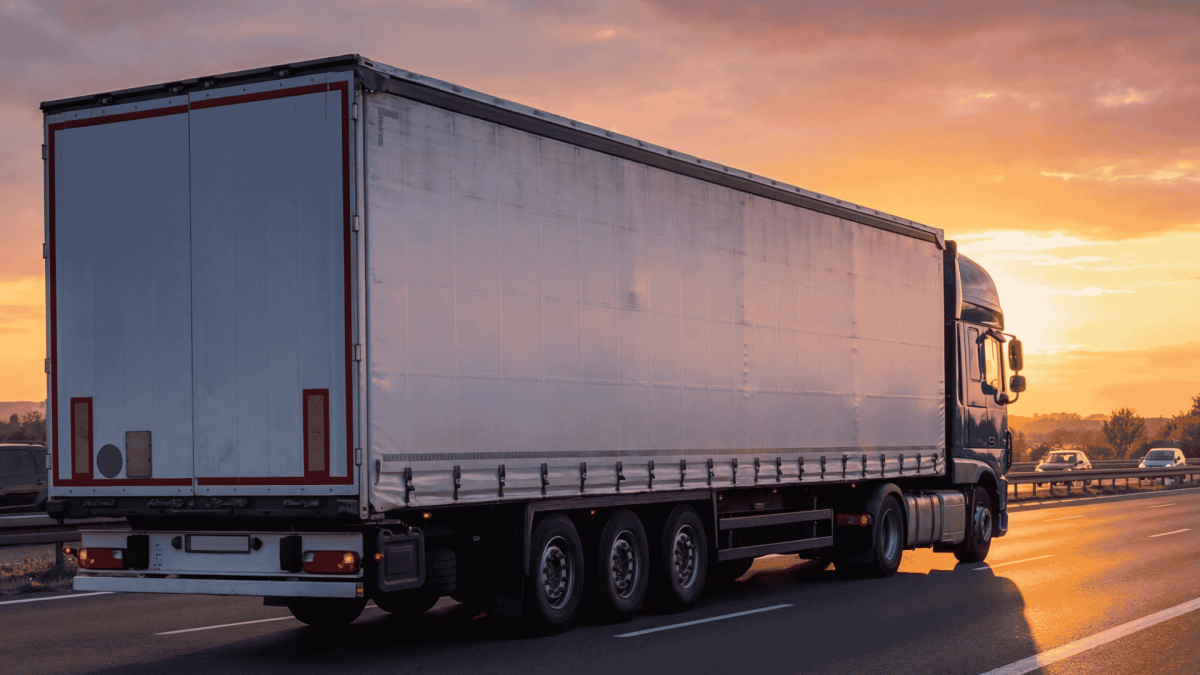
When a commercial truck collides with a passenger vehicle on a North Carolina highway, the consequences are rarely comparable to a standard car accident. An 18-wheeler can weigh up to 80,000 pounds fully loaded, approximately 20 times the weight of an average car. The force involved in these collisions routinely causes catastrophic injuries: traumatic brain injuries, spinal cord damage, multiple fractures, severe burns, and fatalities. The devastation is real, and so is the legal complexity that follows.
According to data from the Federal Motor Carrier Safety Administration (FMCSA), North Carolina recorded 4,992 non-fatal crashes and 135 fatal crashes in 2024 tied to large trucks (Federal Motor Carrier Safety Administration, 2026). Truck and commercial vehicle accidents are responsible for more than 2,500 injuries per year in this state alone (FMCSA MCMIS Data).
What makes these cases especially challenging, and especially important to handle correctly, is that commercial vehicle accidents involve a web of potential defendants, layers of federal regulation, and insurance companies with significant resources dedicated to minimizing what they pay out. Understanding who can be held liable is the first critical step toward fair compensation.
Quick Summary
- North Carolina saw 4,992 non-fatal and 135 fatal large truck crashes in 2024 alone
- Commercial truck accidents involve multiple potentially liable parties, not just the driver
- Federal FMCSA regulations govern trucking operations, and violations can serve as direct evidence of negligence
- Critical electronic evidence like ELD and black box data can be overwritten within days; acting quickly is essential
- Trucking companies deploy insurance teams immediately after an accident; you need experienced legal representation in your corner just as fast
- Compensation may include medical costs, lost wages, pain and suffering, and wrongful death damages
Why Truck Accident Claims Are More Complex Than Car Accident Cases
If you've been in a car accident before, the process is relatively familiar: exchange insurance information, file a claim, negotiate a settlement. Truck accident claims work very differently, and that difference matters enormously for your financial recovery.
- Size and force dynamics are the starting point. Because of the sheer mass involved, truck accidents produce more severe injuries, longer recoveries, and higher medical costs, which means higher stakes for everyone at the negotiating table.
- Federal regulatory oversight adds a layer that doesn't exist in standard car accident claims. Commercial trucking is governed by FMCSA regulations covering everything from driver rest requirements to vehicle inspection standards to cargo securement. Whether those regulations were followed or violated can be central to establishing liability.
- Multiple potential defendants mean that the legal picture is far more complex than pointing to one at-fault driver. Trucking cases routinely involve the driver, the trucking company, cargo loaders, vehicle manufacturers, maintenance contractors, and sometimes freight brokers, each potentially bearing a share of responsibility.
- Corporate insurance teams move quickly after commercial truck accidents. Carriers often have accident response units on call, and their adjusters may arrive at crash scenes faster than injured victims can reach an attorney. Early statements made without legal counsel can be used to minimize or deny your claim.
Who Can Be Held Liable in a North Carolina Truck Accident?
One of the most important things to understand about commercial vehicle collision claims is that liability rarely ends with the driver. North Carolina law allows injured parties to pursue multiple defendants, and doing so thoroughly is often what separates adequate compensation from full recovery.
The Truck Driver
Driver negligence is the most direct form of liability. This includes fatigued driving in violation of hours-of-service rules, distracted driving, speeding, impaired driving, and failure to properly secure loads. Even if the driver is an employee of a larger company, their individual actions can support a claim against them directly.
The Trucking Company
Under a legal doctrine known as respondeat superior, employers are generally liable for the negligent acts of their employees acting within the scope of employment. But trucking companies can also be independently negligent in ways that go beyond their driver's actions, including negligent hiring (employing drivers with poor safety records), inadequate driver training, pressure on drivers to violate hours-of-service rules to meet delivery deadlines, or failure to maintain proper safety policies and procedures.
The Cargo Loading Company
Improperly loaded or unsecured cargo is a significant contributing cause of truck accidents. Shifting cargo can cause a driver to lose control, and overloaded trailers affect braking distances and handling. If a third-party company was responsible for loading the truck, they may share liability for any crash caused by cargo failure.
The Truck Manufacturer or Maintenance Contractor
If defective equipment contributed to the accident (a faulty braking system, a tire blowout caused by a manufacturing defect, or a steering system failure), the manufacturer of the defective component may bear product liability. Similarly, if a third-party maintenance contractor performed substandard work that contributed to a mechanical failure, they can be brought into the case.
Freight Brokers
An emerging and increasingly significant area of commercial vehicle liability involves freight brokers, the intermediaries who connect shippers with carriers. Courts have increasingly recognized that brokers who negligently select unqualified or unsafe carriers can be held liable for accidents those carriers cause. This is a complex and evolving area of law, but one worth investigating in any serious commercial trucking case.
In short: the question of truck accident responsibility in NC is rarely answered with a single name. A thorough investigation of all potentially liable parties is essential to maximizing your compensation.
North Carolina Truck Accident Regulations You Should Know
Commercial trucking in North Carolina is governed by both federal FMCSA regulations and state Department of Transportation requirements. Violations of these rules can serve as powerful evidence of negligence in a personal injury claim.
Hours of Service (HOS) Rules
The FMCSA's hours-of-service regulations limit how long commercial drivers can be on the road without rest. Property-carrying drivers are generally limited to 11 hours of driving after 10 consecutive hours off duty and may not drive beyond the 14th consecutive hour after coming on duty (FMCSA Hours of Service Regulations). Violations of HOS rules, which are recorded in Electronic Logging Devices, are a major contributing cause of fatigued driving accidents.
Electronic Logging Device (ELD) Mandate
Since December 2017, the FMCSA has required most commercial motor vehicle drivers to use Electronic Logging Devices, which automatically record driving time and replace paper logbooks (FMCSA ELD Rule). ELD data is often among the most critical evidence in a truck accident case, and trucking companies know it. Preserving this data quickly after an accident is essential.
Weight Limits and Inspection Requirements
North Carolina enforces federal weight limits: a maximum of 80,000 pounds gross vehicle weight for standard configurations (NCDOT Commercial Vehicle Enforcement). Overweight trucks have significantly degraded stopping distances, especially at highway speeds. Regular pre-trip inspections are federally required; failure to perform and document these inspections is another form of negligence.
Driver Qualification Standards
The FMCSA establishes minimum standards for commercial driver licensing, medical fitness, and background checks. Trucking companies are required to maintain driver qualification files. When companies cut corners on these requirements, particularly by employing drivers with disqualifying violations or health conditions, they expose themselves to significant liability.
Common Causes of Tractor-Trailer Accidents in NC
Understanding what typically causes semi-truck crashes in North Carolina can help identify which parties and which regulations are most relevant to your claim:
- Driver fatigue: Hours-of-service violations remain one of the most common and dangerous contributors to large truck accidents
- Distracted driving: Including cell phone use, which is prohibited for commercial drivers under federal law
- Speeding to meet delivery deadlines: Pressure from carriers to maintain aggressive schedules puts both drivers and other motorists at risk
- Improper cargo loading: Unsecured or shifting loads can cause jackknifing, rollovers, or debris in the roadway
- Inadequate vehicle maintenance: Brake failures, tire blowouts, and lighting malfunctions that go undetected or unaddressed
- Blind spot failures: Commercial trucks have significant blind spots on all four sides; improper lane changes or turns are a frequent cause of collision
- Adverse weather conditions: Trucks require substantially longer stopping distances in rain, ice, or fog, and drivers must adjust accordingly
Evidence That Matters in a Commercial Vehicle Collision Claim
One of the most important differences between truck accident claims and standard car accident claims is the volume and variety of evidence available, and how quickly it can disappear. Trucking companies and their insurers often begin preserving evidence that helps their case while discarding evidence that helps yours. Acting quickly is critical.
Key evidence in tractor-trailer accident liability cases includes:
- Electronic Logging Device (ELD) data: Records of driving time, rest breaks, and HOS compliance
- Event Data Recorder ("black box") data: Speed, braking, steering inputs, and other vehicle dynamics in the seconds before impact
- Driver qualification and training files: Employment history, license records, previous violations, training documentation
- Vehicle inspection and maintenance records: History of repairs, known mechanical issues, inspection results
- Cargo manifests and weight tickets: Evidence of load configuration and any overweight violations
- Dashcam and traffic camera footage: If preserved promptly, often the most compelling evidence of fault
- Witness statements: Accounts from other drivers, bystanders, or emergency responders
- Cell phone records: To determine whether distracted driving contributed to the crash
- Drug and alcohol testing results: Post-accident testing is federally required in many circumstances
A spoliation letter is a legal notice demanding preservation of evidence, and it should be sent to the trucking company and their insurer as quickly as possible after the accident. An experienced NC truck accident attorney can do this on your behalf immediately.
What Compensation Can You Pursue After a Semi-Truck Crash?
Because of the severity of injuries typically involved, semi-truck crash compensation claims are often among the most significant in value of any personal injury case. Depending on the circumstances of your accident, you may be entitled to pursue:
- Medical expenses: Emergency care, hospitalization, surgery, rehabilitation, assistive devices, and ongoing treatment
- Lost wages and lost earning capacity: Income you've lost and may continue to lose if your injuries affect your ability to work
- Pain and suffering: Compensation for the physical pain and emotional distress caused by your injuries
- Property damage: The cost to repair or replace your vehicle and any other personal property damaged in the accident
- Permanent disability or disfigurement: Additional compensation where injuries result in lasting impairment
- Wrongful death damages: If a loved one was killed in a commercial truck accident, surviving family members may be entitled to pursue a wrongful death claim
For more information about the types of damages available in North Carolina personal injury and wrongful death cases, visit our Personal Injury & Wrongful Death practice area page.
Why You Need an Experienced NC Truck Accident Attorney
The moment a commercial truck accident happens, the trucking company's insurance carrier begins managing its exposure. Adjusters may contact injured parties within hours, presenting a friendly demeanor alongside settlement offers that seem significant but are frequently a fraction of what a victim is actually entitled to.
Commercial trucking cases involve a level of complexity (federal regulation, multiple defendants, technical evidence like ELD data) that requires experienced legal representation. An attorney who handles these cases regularly brings several critical advantages:
- Immediate evidence preservation through spoliation letters and, where necessary, legal action to prevent destruction of records
- Accident reconstruction expertise and relationships with qualified expert witnesses
- Knowledge of FMCSA regulations and how violations translate into legal liability
- Experience negotiating with commercial insurance carriers who are skilled at minimizing payouts
- Willingness to litigate when insurance companies refuse to offer fair compensation
For guidance on what to look for when choosing a personal injury attorney, see our article: How to Choose a Personal Injury Attorney.
Time is genuinely of the essence. Physical evidence degrades, electronic data is overwritten, witnesses' memories fade, and North Carolina's statute of limitations for personal injury claims is generally three years from the date of injury, though certain circumstances can shorten that window. Don't wait to speak with an attorney.
Frequently Asked Questions
How is truck accident liability different from a regular car accident?
Truck accident claims involve federal regulatory compliance, multiple potentially liable parties (the driver, trucking company, cargo loaders, manufacturers, and potentially freight brokers), significantly more evidence (ELD data, black box records, driver qualification files), and commercial insurance policies that can be substantially larger than standard auto policies. The complexity means these cases almost always require specialized legal representation.
What NC or federal regulations apply to commercial truck drivers?
Commercial truck drivers in North Carolina are subject to FMCSA regulations governing hours of service, vehicle inspections, driver qualifications, cargo securement, and Electronic Logging Device requirements. North Carolina also enforces NCDOT commercial vehicle weight limits and roadway restrictions. Violations of any of these regulations can serve as evidence of negligence in a personal injury claim.
How long do I have to file a truck accident claim in North Carolina?
North Carolina's statute of limitations for personal injury claims is generally three years from the date of the accident. However, certain circumstances, including claims involving government entities or minors, may alter this timeline. Even if you have time to spare under the statute of limitations, you should act quickly to preserve critical electronic evidence, which trucking companies may overwrite within days or weeks.
Can I sue both the driver and the trucking company?
Yes. North Carolina law allows injured parties to pursue all potentially liable defendants simultaneously. The trucking company can be held liable for the driver's negligent actions under respondeat superior, and may also bear independent liability for negligent hiring, training, or maintenance practices. Pursuing all available defendants is typically important to ensuring full compensation, as it maximizes the insurance coverage available to satisfy your claim.
What should I do immediately after a truck accident in NC?
If you are physically able, take these steps: call 911 and request emergency services; do not move your vehicle unless absolutely necessary for safety; document the scene with photos and video, including the truck's DOT number, license plate, and company name; get contact information from any witnesses; seek medical care immediately even if you feel you weren't seriously injured (adrenaline can mask symptoms); and contact an experienced NC truck accident attorney as soon as possible. Do not give any recorded statements to the trucking company's insurance adjuster before speaking with a lawyer.
When Complexity Demands Experienced Advocacy
Commercial truck accident cases are not like other personal injury claims. The injuries are more severe, the legal landscape is more complex, and the opposing parties are better resourced. Trucking companies and their carriers have teams of professionals working to protect their bottom line from the moment of impact.
You deserve the same level of commitment on your side.
The Law Offices of Timothy D. Welborn has the experience and dedication to take on commercial vehicle collision claims in North Carolina, investigating every liable party, preserving critical evidence, and fighting for the full compensation you deserve. Whether your case involves a tractor-trailer, a delivery vehicle, or any other commercial carrier, we're ready to stand in your corner.
Contact us today for a free, no-obligation consultation and let's discuss how we can help you pursue accountability and recovery after a North Carolina truck accident.
